
Less is More: Daiquiri

© Damien Guichard
Less Is More is back! After a brief hiatus for totally boring logistical reasons, we have returned to our regularly scheduled chaos.
A quick refresher: every month we take a classic cocktail and remove one key ingredient. Why? Because we’re curious and committed to understanding what actually makes a classic… classic. Balance, structure, identity — all that good stuff.
This month’s victim: the Daiquiri.
Since its creation (likely late 1800s/early 1900s, though possibly earlier if we accept that the Daiquiri is punch-adjacent), it’s fair to say the Daiquiri is the mother of all sours. Anything in the sweet + sour + booze family tree owes its top-selling success to this humble, perfectly-balanced banger,
And though the world has given us countless “daiquiri” variations — pineapple, strawberry, frozen, Hemingway, all those neon 1980s concoctions from the freezers of questionable decisions — they all share one essential thing:
Lime.
So naturally… I removed it. Because why keep things simple?
A Daiquiri must still be acidic, though, so we needed an alternative. Trouble is, citrus is incredibly hard to replace. It’s not just acidity — it’s fruitiness, brightness, and most crucially: oils. Our brains love oils and fats; they soften alcohol’s burn and make sours taste lighter and more complete. No non-citrus acid source can truly replicate that effect.
Meanwhile, Daiquiris suffered their own unfortunate glow-up in the 1980s, becoming slushy sugar bombs via the frozen aisle and industrial syrups. Recently, however, with bartenders on a post-pandemic mission to make bars fun again, many of those “disco drinks” have been revived with modern techniques and actual craft and techniques.
So! Let’s attempt a Raspberry Daiquiri-ish, shall we?
To keep things stylistically close to a classic Daiquiri — clean, bright, elegant — we’re processing raspberries with pectinex and clarifying the juice before turning it into a cordial. We don’t want a slushy, do we?
Now team we’ve done this before: for every 1000 g of fruit, add 2 g of pectinex (thanks Dave Arnold). I prefer frozen fruit because:
- It’s frozen at peak ripeness.
- It’s cheaper.
- Freezing breaks down cell walls, giving you more juice when thawed — science, baby.
Fun fact: raspberry juice has a PH level very comparable to that of citrus, which makes it all the more interesting to use as a substitute.
© Damien Guichard
Pectinex works best warm, but we don’t want to cook the raspberries. Toss everything into a sous-vide or zip-top bag (if, like me, your vacuum sealer gave up on you). Hold at 40°C for 20 minutes.
Strain through a coffee filter, let it drip, and now we make our cordial.
For this, we’re using fructose powder instead of regular sugar, for two reasons:
- Fructose is the dominant natural sugar in raspberries.
- It dissolves at much lower temperatures — even room temp — so you keep the juice’s fresh character.
Use a 1:3 ratio of fructose to raspberry juice.
Cordial ready? Lovely. Let’s build a drink.
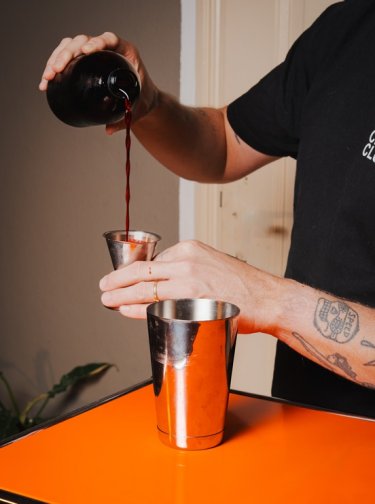
- 60 ml White Rum
- 35 ml Raspberry Cordial
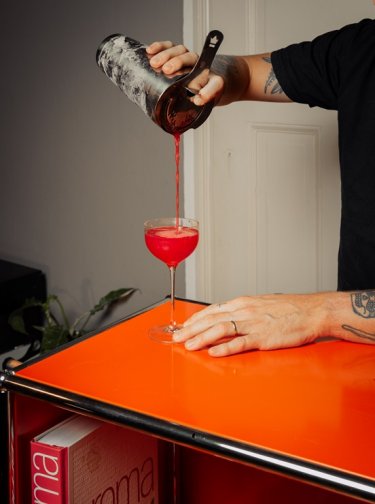
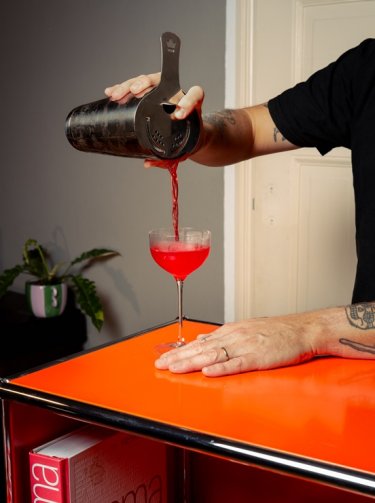
Shake, strain, admire.
Is it delicious? Absolutely. Sweet-tart, fragrant, silky, and unapologetically raspberry.
Is it a Daiquiri?
Absolutely not. Without citrus oils, it simply doesn’t hit the same.
But is it fun and delicious? Absolutely.
© Damien Guichard
Looking for more drinks industry insights?
Join the entire industry at BCB.