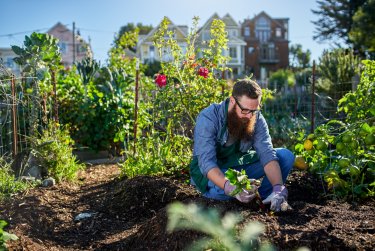
In contrast to the ecological footprint, which measures the negative effects of emissions on the environment, the ecological handprint focuses on methods that have a positive effect - for example, because other people such as guests or colleagues are inspired by them. More info at www.handabdruck.org
Climate protection in concrete terms: The Zero Foodprint project
Based on the "1 percent for the climate" method, the "Zero Foodprint" initiative, which originated in the USA and is now being launched in Germany, ensures that regenerative agriculture is promoted: Restaurants pass on 1 percent of their turnover (either as a surcharge on the bill or priced in) as a donation. The money goes into the initiative's soil fund and benefits farmers and producers who use methods to build up humus on their agricultural land.
Humus is a natural sink, contributes to carbon storage and thus climate protection - and is the better soil for nutrient-rich, healthy products. Bars can also join in - after all, fresh fruit and vegetables are used here too, as well as spirits, the basis of which is almost always a field crop or agricultural product. More info: www.zerofoodprint.de