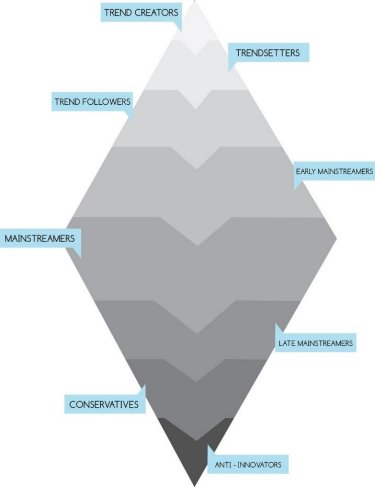

Now and again I come across the rant of a disgruntled bartender complaining about a certain trend that they find exasperating: alcohol free spirits, the come back of a particularly artificial liqueur that had its prime in the 1990s or a disco cocktail that should have stayed stuck in the past and never been revived, you get the gist of it. Every time, I wonder what makes a trend stick, and in turn, what makes it go away. How does a product, an aesthetic or concept spread in a community?
What is a trend?
The first thing you have to look at is what actually defines a trend – and the internet is unanimous: a general direction in which something is developing or changing. But it is the way it is defined by Martin Raymond in The Trend Forecaster’s Handbook that struck me as particularly relevant to our industry.
“A trend can be defined as the direction in which something tends to move and which has a consequential impact on the culture, society or business sector through which it moves. (…) Trends are compulsive, addictive and, in some cases, viral – infecting us when we least expect it, and on occasion whether we want it or not”
The bartender at the heart of everything
And here is what I asked myself? How instrumental are we in spreading a trend? Let’s take the example of a product. Product A has just been released on the market by one of the biggest spirit distributors of our industry. One of their sales representatives will soon come to your bar and gift you a free bottle. They will boast the quality of said product, highlight its sustainable approach, the competitive pouring costs and its innovative qualities. How lucky of you!